













・翌月にまとめてお支払い可能
・手数料無料(口座振替の場合)
・アプリでご利用金額を確認できて安心



¥3,000 税込
残り1点
 なら 手数料無料の 翌月払いでOK
この商品は送料無料です。
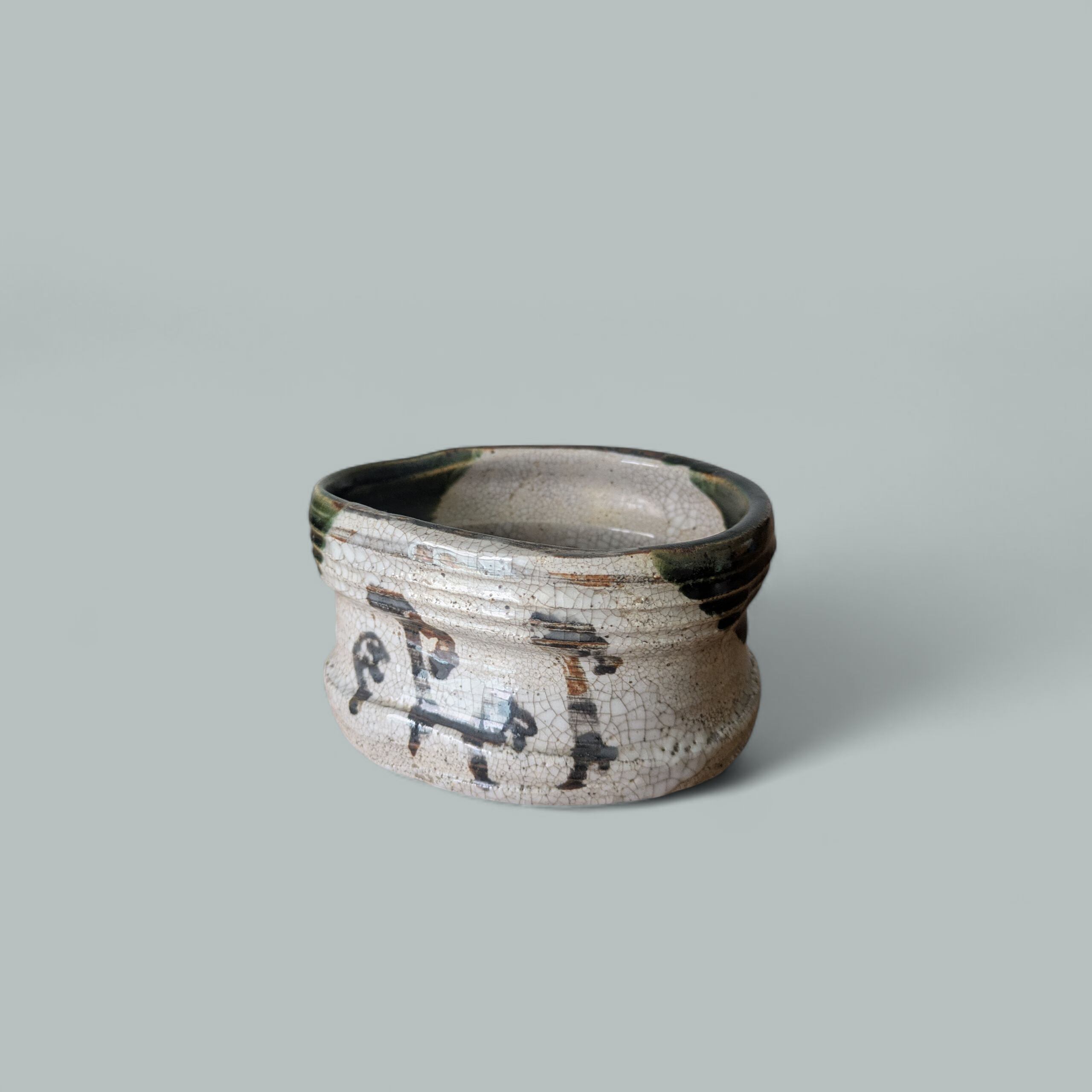
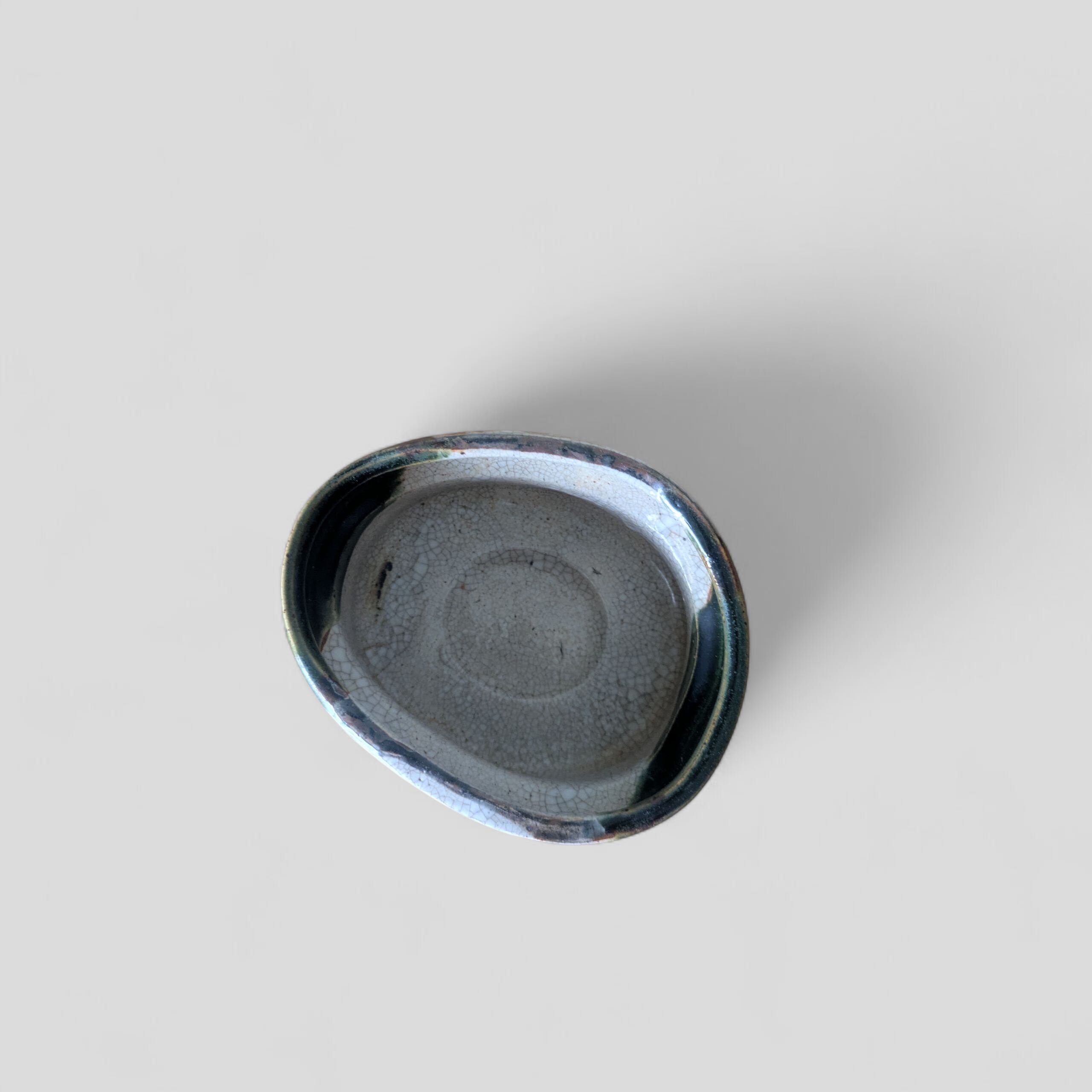
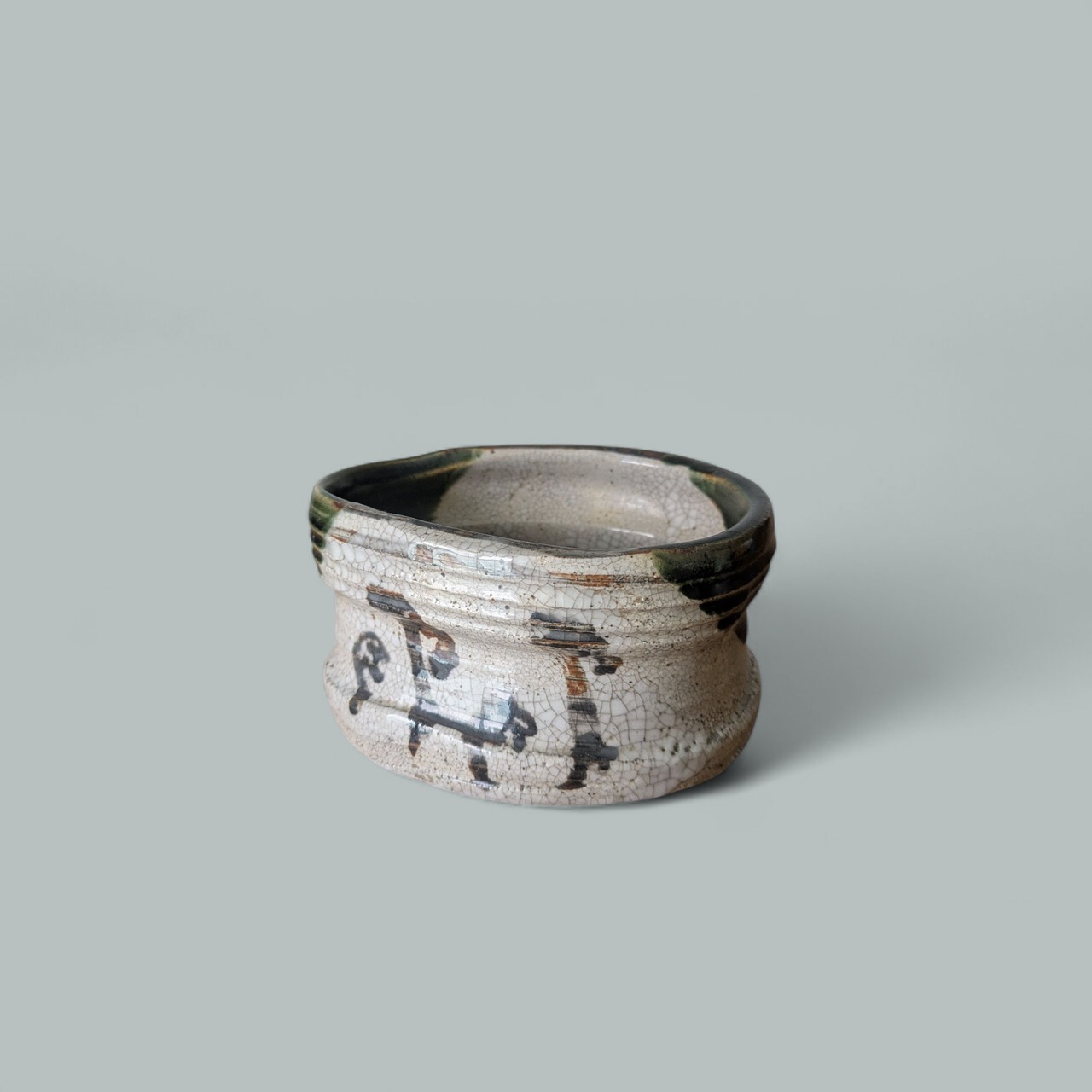
Oribe ware is a style of Japanese pottery that originated in the Mino province (modern Gifu Prefecture) during the late Momoyama Period (late 16th to early 17th century).
Patron: Named after Furuta Oribe, a high-ranking samurai and disciple of tea master Sen no Rikyū. Oribe's bold and unconventional taste strongly influenced the style.
Key Aesthetics (Revolutionary): It broke away from the subdued aesthetics of previous tea ceramics (like Raku and early Shino).
Asymmetry: Pieces are often deliberately distorted, irregular, or warped (e.g., kutsugata - "shoe-shaped" bowls).
Bold Decoration: Characterized by vibrant colors and playful, abstract designs.
Signature Features:
Green Glaze: The most recognizable feature is a brilliant, translucent copper-green glaze (Oribe glaze) often applied freely or partially.
Iron Decoration: Abstract or stylized motifs (geometric, natural scenes) drawn in iron oxide slip on the white or buff clay body.
Main Types: Common styles include Green Oribe (Ao-Oribe), Black Oribe (Oribe-Kuro), and Total Oribe (Sō-Oribe - entirely covered in green glaze).
Oribe ware is celebrated for its individualism and modernistic flair, symbolizing the expressive cultural mood of the Momoyama period.
送料・配送方法について
お支払い方法について